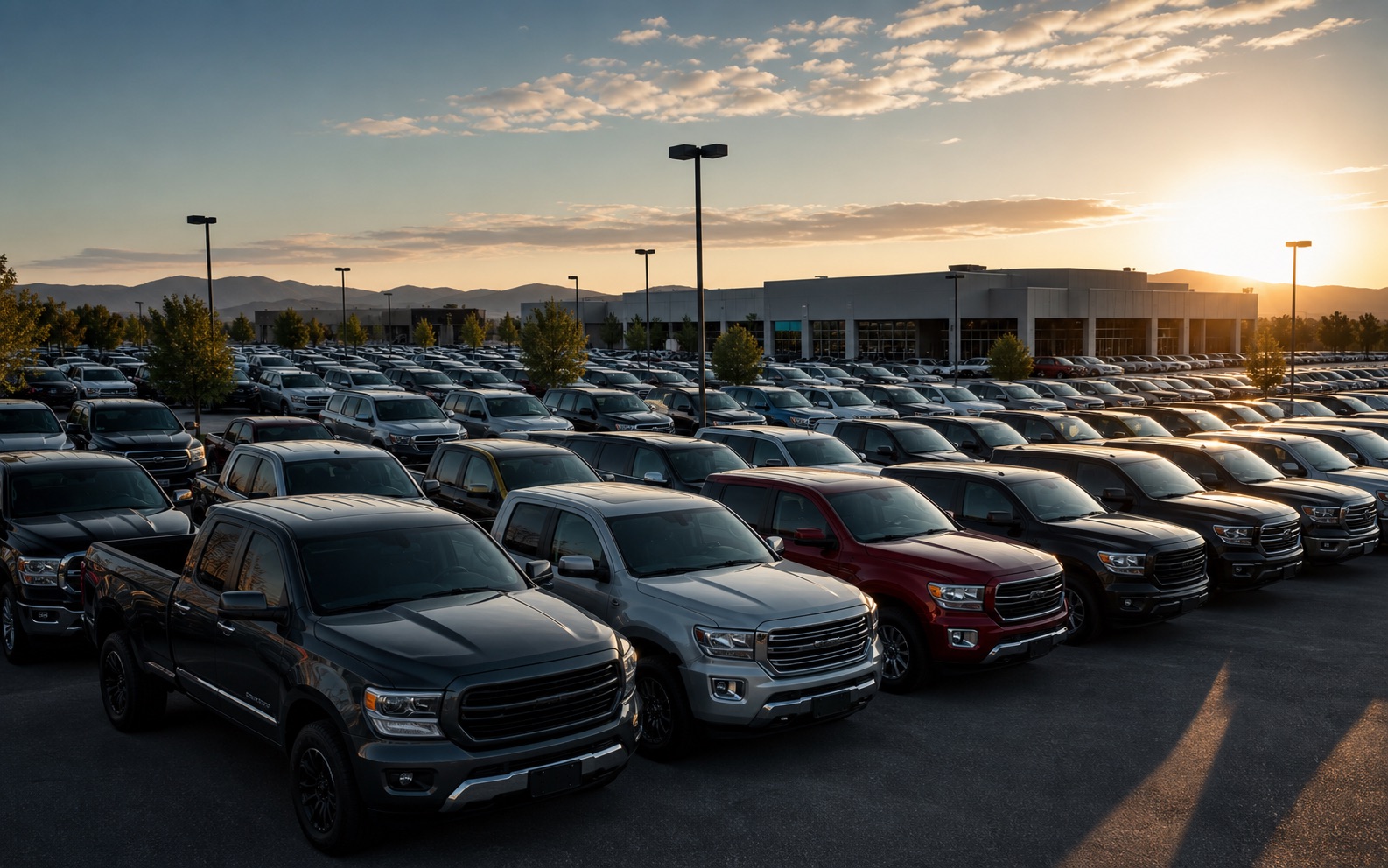
Here is the headline you have probably seen: used car prices are falling. Here is the headline nobody ran: the price on the windshield is the highest it has been since 2023.
Both come from the same data. They just measure different ends of the same transaction.
- Manheim index
- 211.5Mid-July 2026, down 0.6% from June
- Vs. last year
- +2%Wholesale values above July 2025
- Retail listing
- $27KTopped $27,000 in June, first time since 2023
Two different prices, two different directions
The Manheim Used Vehicle Value Index tracks what dealers pay for cars at wholesale auction. Adjusted for mix, mileage and seasonality, it landed at 211.5 in the first half of July — down 0.6% from June. That follows a June reading of 212.9, which itself sat about 1% below the multi-year high the index set back in March.
So wholesale is easing off a spring peak. That is real.
Now the other end. Cox Automotive put the average used-vehicle retail listing price above $27,000 in June — the first time it has cleared that mark since 2023. In January that number was $25,533. In May it was $26,918, up 6% year over year. Retail has been climbing all year while wholesale rolled over.
Dealers buy at the first number and sell at the second. When the first one softens and the second one does not, margin is sitting in the middle. Some of that is legitimate — reconditioning, floorplan interest, the cost of having the thing sit on a lot. Some of it is just lag. Retail pricing is sticky on the way down. It always has been.
Do not confuse “cooling” with “cheap”
I want to be straight with you, because plenty of people are about to oversell this. Wholesale values are still up 2% from a year ago. On a non-adjusted basis they are up 2.4%. A 0.6% monthly dip after a strong spring is normalization, not a collapse.
Cox chief economist Jeremy Robb described the market as “fairly balanced and set up to support dealers as we move into the second half of the year.” Read that sentence again. Balanced and supportive of dealers is not the same thing as a buyer’s market.
A 0.6% monthly dip after a strong spring is normalization, not a collapse. Anyone selling you “prices are crashing” is selling you something.
Supply is the number that actually moves a deal
Forget the index for a second. Supply is what determines whether a salesperson can say no to you.
Used retail days’ supply was 47 in June. That is up from a record low set in March and up from 42 in February. Wholesale days’ supply sat at 28 as of July 15, about a day and a half more than the same point in 2025. Inventory is loosening slightly — but from genuinely tight levels. Dealers held roughly 2.04 million used vehicles in April, down 4.8% year over year and one of the lowest readings since 2019.
Translation: there is a little more room than there was in the spring, and not much more than there was last summer.
The electric outlier
One segment is doing something completely different. Used EV values at wholesale are up 12.4% year over year, against 1.1% for everything else. In June the EV index rose 1.7% in a single month.
The reason is not mysterious. The federal credits — $7,500 on a new EV, $4,000 on a used one — ended on September 30, 2025 under the One Big Beautiful Bill Act. New EV demand took the hit, and buyers who still wanted an electric car went shopping used. Cox notes EVs still make up less than 4% of Manheim sales volume, so a small pool of cars absorbed a lot of redirected demand.
If you have been waiting for used EV bargains to get better, that window has been closing, not opening.
What I would actually do
- Check how long the specific car has been listed. Not the model — the VIN. A unit sitting 60-plus days is a different conversation than one that landed last Tuesday.
- Pull three to five real comparables within a couple hundred miles, same trim, similar mileage. Screenshots. Bring them.
- Do not lead with the index. Nobody on a sales floor cares that Manheim moved 0.6%. They care that the silver one across town is $1,400 less.
- Expect to negotiate a few hundred, not a few thousand, on a clean in-demand unit. Save your energy for the fees, where there is usually more room.
The short version
Auction prices are drifting down from a spring peak. Retail prices are at a three-year high. That lag is normal and it is temporary, which means right now the leverage is in finding a car that has been sitting — not in arguing about the market.
Sources
- Manheim Used Vehicle Value Index: Mid-July 2026 Trends — Cox Automotive, July 17, 2026
- Manheim Used Vehicle Value Index Normalizes in Q2 After Strong Start in 2026 — Cox Automotive, July 8, 2026
- Used Vehicle Sales Pace Slows in May as Prices Climb Higher — Cox Automotive, 2026
- Used-Vehicle Inventory Recovers from Record Low Levels, Increases in April — Cox Automotive, 2026
DougCupples content is educational market commentary, not individualized financial or purchasing advice. Figures reflect the reporting dates shown and move quickly — confirm current numbers before you act on them.